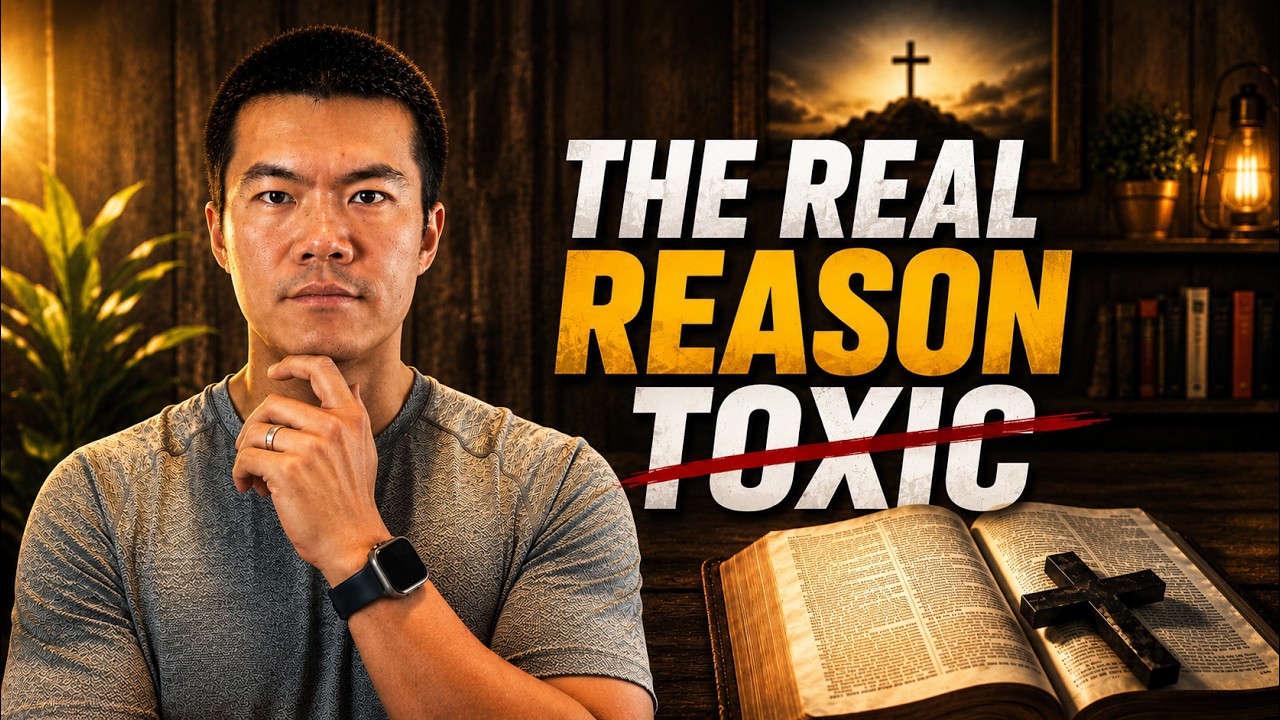
God Didn’t Design a Toxic Relationship… Here’s What’s Actually Going Wrong
There are a lot of relationships today that feel toxic.
There’s anxiety. Jealousy. Control. Resentment. Confusion. Distance.
And sometimes, those things really are signs of an unhealthy relationship.
But what if some of what we call “toxicity” is actually the result of how the relationship was built in the first place?
Here are 12 reasons your relationship may feel toxic.
1. You Built the Relationship on Physical Attraction, Not Covenant
If your relationship started with sex, chemistry, and attraction—but no commitment—you didn’t build a relationship.
You built a bond without a foundation.
Sex before marriage creates attachment without security. And over time, that confusion can turn into anxiety, jealousy, and control.
2. You’re Living Together… But Not Committed
Living together before marriage feels like progress.
But often, it’s just delaying clarity.
You’re sharing space, routines, and intimacy without the covenant that holds it together.
So when conflict comes, there’s no anchor.
And what people call “toxicity” is often instability.
3. You’re Dating Without a Clear Intention of Marriage
If you don’t know where it’s going, then everything becomes negotiable.
Your time.
Your boundaries.
Your expectations.
And eventually, someone feels used, misled, or stuck.
That tension gets labeled “toxic.”
But really, it’s directionless.
4. You’re Unequally Yoked Spiritually
This is one of the biggest ones.
The Bible says in 2 Corinthians 6:14:
“Don’t team up with those who are unbelievers. How can righteousness be a partner with wickedness?”
If one person is trying to follow God and the other isn’t, you are pulling in opposite directions.
That creates friction in values, decisions, and priorities.
And eventually, resentment.
5. You Ignored Red Flags in Their Family Patterns
Look at how they were raised.
Look at their parents’ relationship.
Because people don’t just enter relationships—they bring patterns with them.
If there’s a history of broken commitment, chaos, or dysfunction, and it hasn’t been healed, it will show up again.
6. You Rely on Feelings as Your Main Guide
Feelings are important—but they’re not a compass.
If your relationship is guided only by emotion, then every disagreement feels like a crisis.
One day you’re in love.
The next day you’re questioning everything.
That instability feels toxic—but it’s actually emotional immaturity.
7. You Tolerate Sin Instead of Confronting It
Sometimes we call something “toxic” when it’s actually unaddressed sin.
Lying.
Manipulation.
Selfishness.
The Bible says in Galatians 6:7:
“You will always harvest what you plant.”
If you allow unhealthy behavior to continue, you will eventually live in its consequences.
8. You Avoid Conflict Instead of Resolving It
A lot of people say, “We never fight.”
That’s not always a good sign.
It might mean you’re suppressing truth.
You’re walking on eggshells.
You’re keeping the peace instead of building trust.
And over time, that silence turns into distance.
9. You’ve Lost Your Identity in the Relationship
If you can’t be honest, or if you feel like you’re performing, that’s not love—that’s fear.
But here’s the truth:
You didn’t just lose yourself.
You traded authenticity for acceptance.
10. There’s Control Disguised as Love
Jealousy. Possessiveness. Isolation.
These are often called “toxic traits”—and they are.
But they usually grow where there is insecurity and a lack of trust from the beginning.
Control doesn’t appear randomly.
It grows in unstable environments.
11. There’s No Accountability or Responsibility
When something goes wrong, and it’s always the other person’s fault, that’s a problem.
But it’s not just their problem.
Because if both people aren’t willing to take responsibility, the relationship can’t grow.
12. You’re Trying to Get the Benefits of Marriage Without the Commitment
This might be the biggest one.
You want emotional support.
Physical intimacy.
Partnership.
Stability.
But without covenant.
Without vows.
Without responsibility.
Without God at the center.
And then when it breaks, we call it “toxic.”
But the truth is—you were asking something temporary to carry the weight of something permanent.
What Does the Bible Say About Love?
The Bible gives us a very different picture of love.
1 Corinthians 13:5 says:
“Love is not irritable, and it keeps no record of being wronged.”
Real love isn’t chaos.
It’s not control.
It’s not confusion.
It’s built on truth.
Commitment.
Sacrifice.
So What Do You Actually Do?
If you’re in a relationship that feels toxic, here’s the path forward.
1. Get Honest About the Foundation
Was this relationship built God’s way—or your way?
2. Re-establish Boundaries Rooted in Truth
Not just emotional reactions—but convictions.
3. Pursue Alignment, Not Just Attraction
Spiritually.
Morally.
Purposefully.
4. Stop Playing Marriage—Either Move Toward It or Step Away
Clarity is kindness.
5. Invite God Into the Relationship
Because without Him, you’re trying to sustain something you weren’t designed to carry alone.
Some relationships need healing.
Some need rebuilding.
And yes—some need to end.
But not because culture told you to “protect your peace.”
Because you’ve chosen truth over confusion.
And when you build relationships God’s way, you don’t just avoid toxicity—you create something strong, lasting, and life-giving.
And that’s the better story.
Join the Conversation
If this challenged you or helped you see things differently, make sure you hit like, subscribe, and drop a comment below.
I’d love to hear your thoughts: what’s one thing you’ve seen destroy relationships today?
And if you know someone who needs this, share it with them.
I’ll see you in the next one.